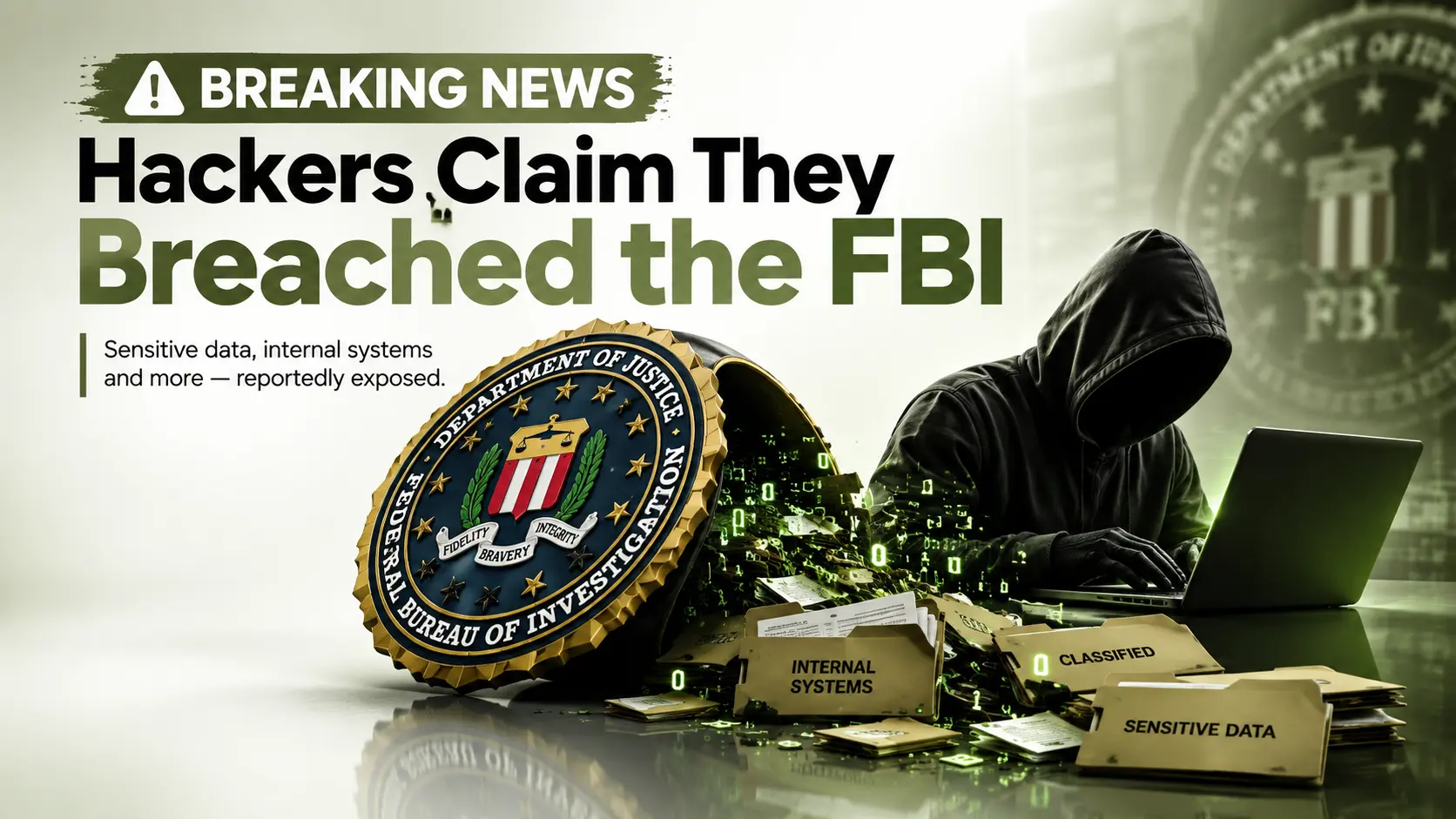
A well known cybercriminal group called ShinyHunters says it breached systems connected to the FBI and stole sensitive personal data on almost every FBI agent and job applicant. The FBI is investigating an apparent breach of its jobs website after a criminal hacking group claimed to have accessed very sensitive data on nearly all agents and job applicants. This FBI data breach story is still developing, and this article separates what has been confirmed from what remains an unverified claim, while also covering what it means for anyone responsible for a security risk assessment at their own organization. ABC News
Table of Contents
- What Is Confirmed So Far
- Who Is ShinyHunters
- How the Alleged Breach Happened
- What Data Is Allegedly Exposed
- Why the Hackers Say They Did This
- Why This Breach Is Different
- The FBI’s Official Response
- The Phishing and Social Engineering Risk That Follows
- What This Means for Vendor Risk Management
- What Affected Individuals Should Do
- Lessons for Every Organization
- Frequently Asked Questions
- Get Help Protecting Your Organization
What Is Confirmed So Far
The FBI said it is aware of a cybercriminal enterprise group claiming a compromise of the fbijobs.gov portal and alleged impact to FBI employee personally identifiable information. The bureau added that while the point of breach is still undetermined, whether a third party or the FBI’s own enterprise, it is actively and aggressively investigating the matter and working closely with third party providers that support fbijobs.gov to mitigate risk. Al JazeeraAl Jazeera
The FBI told CNN that a job application portal on the bureau’s website was down as it dealt with the incident, hours after the hacking group ShinyHunters claimed the FBI as a victim on its dark website. What has not been independently confirmed is the full scope of what was actually taken, since that information currently comes only from the hackers themselves. KPTV
Who Is ShinyHunters
ShinyHunters is a prolific cybercriminal group known for large scale data theft and extortion. The group previously weaponized a software flaw, tracked as CVE-2026-35273, in June 2026 to break into enterprise networks and extort victims, and more recently hijacked the dark web leak site of the Clop ransomware crew. TechCrunchThe Hacker News
Groups like this typically rely on the same techniques taught in certified ethical hacker (CEH) training, just aimed at criminal rather than defensive purposes, which is exactly why organizations invest in ethical hacking penetration testingto find the same weaknesses before a group like ShinyHunters does.
How the Alleged Breach Happened
Independent reporting indicates the hackers breached an Oracle PeopleSoft server, often used by human resources and recruiters to store job applicants’ personal information, then pivoted to breach an Amazon hosted government cloud storing the agents’ and applicants’ data. ShinyHunters told the publication that they took terabytes of data.
This detail matters. The entry point described is not the FBI’s core investigative network, but an HR and recruiting adjacent system running on cloud infrastructure. That is precisely why a proper cloud security assessment of every connected vendor system, not just flagship internal tools, has become a baseline requirement for any organization holding sensitive personal data.
What Data Is Allegedly Exposed
A sample of roughly 5,000 alleged agent records reviewed by 404 Media included names, addresses, phone numbers, and details on FBI employees’ spouses. The hacking group’s message claimed it had compromised very sensitive data on almost all FBI agents and individuals who filed an application with the FBI for a job. None of this has been independently confirmed as complete or fully accurate, and figures like these should be treated as claims until validated by the agency or trusted third parties. 404 MediaABC News
Why the Hackers Say They Did This
Unusually, ShinyHunters says the motive here is not primarily financial. The message, directed to the FBI director and the assistant director in charge of the FBI’s cyber division, demanded the bureau correct or remove what it called false allegations in a May public service announcement that described the group as a cyber criminal group specializing in large scale data breaches and extortion. The group reportedly gave the FBI one week to comply. ABC NewsABC News
Why This Breach Is Different
One threat intelligence expert noted that while nation states or nation state connected groups have compromised law enforcement organizations before, with the 2015 OPM breach remaining the most notable example, a cybercrime brand publicly claiming an FBI compromise is different. The Hacker News
The stakes are unusually high given who is affected. The theft of agents’ personal information could present a major counterintelligence threat, where agents and their families are extorted into cooperating with a foreign government. This is a textbook example of why an intentional insider threat is not the only danger security teams need to plan around; an external actor exploiting personal data can create the same coercion risk from outside the organization. TechCrunch
The FBI’s Official Response
Several news outlets, including Reuters, reported they had seen parts of the data claimed to be part of the breach. Beyond its public statement, the FBI has emphasized that the true point of entry, whether a vendor system or its own enterprise, is still under investigation, and it is coordinating directly with the third party providers that operate fbijobs.gov. Al Jazeera
The Phishing and Social Engineering Risk That Follows
Whenever names, addresses, and phone numbers leak at this scale, the immediate secondary risk is targeted phishing. Attackers commonly use stolen personal details to craft convincing messages, and it is worth reviewing real phishing email examples to understand what a targeted attempt referencing a real employer or job application might look like. This kind of social engineering risk is exactly why security awareness training increasingly focuses on recognizing messages that reference real, leaked personal information rather than generic spam.
What This Means for Vendor Risk Management
Whatever the final scope turns out to be, the reported entry point is a lesson every organization, not just federal agencies, should take seriously. HR platforms, recruiting portals, and other vendor hosted systems routinely hold sensitive personal data, yet they often receive far less scrutiny than core production systems. Effective vendor risk management cannot stop at contract signing; it requires ongoing monitoring of third party systems that touch sensitive data, clear breach notification agreements with vendors, and regular independent testing of exactly the kind of HR and recruitment infrastructure that rarely makes it onto a security team’s priority list.
What Affected Individuals Should Do
If you applied for a position with the FBI or work as an agent, there are practical steps worth taking regardless of how this story resolves:
- Monitor your credit reports and consider a credit freeze given the exposure of names and addresses; the FTC’s identity theft guidance is a reliable starting point
- Be alert to phishing or social engineering attempts referencing your application or employment history
- Watch for unusual contact directed at family members, given the counterintelligence angle security researchers have raised
- Follow official FBI communications rather than unverified claims circulating on social media or dark web forums
- Report suspicious contact immediately through official channels rather than engaging with unknown parties
Lessons for Every Organization
This incident, even before it is fully resolved, offers a clear takeaway: a breach claim does not need to be fully verified to cause real reputational and operational damage, and the actual point of compromise is very often a third party vendor system rather than the core network everyone assumes is the target. Any organization handling sensitive personal data should treat this as a prompt to review exactly which vendors and HR adjacent systems hold sensitive records, and to run an independent security risk assessment rather than relying on the vendor’s own assurances.
Frequently Asked Questions
Is the FBI data breach confirmed?
Partially. The FBI has confirmed it is aware of a cybercriminal group’s claim regarding the fbijobs.gov portal and is investigating. It has not confirmed the full scope of data allegedly stolen. Al Jazeera
Who is behind the alleged breach?
ShinyHunters, a group known for large scale data theft and extortion campaigns. TechCrunch
What data was allegedly stolen?
Names, addresses, phone numbers, and spouse details for FBI agents and applicants, based on a sample of roughly 5,000 records reviewed by journalists. 404 Media
How did the breach reportedly happen?
Through an Oracle PeopleSoft HR server, with a pivot into a linked Amazon hosted cloud environment.
Why are the hackers demanding something other than money?
They are demanding the FBI retract statements from a May advisory describing the group as a cybercriminal extortion outfit. ABC News
Should FBI employees be worried about identity theft?
Given the nature of the data allegedly exposed, credit monitoring, phishing awareness, and caution around unsolicited contact are all reasonable precautions.
Could something like this happen to a private company?
Yes. The reported entry point is exactly the kind of vendor connected system a web application penetration testingengagement is designed to evaluate.
Get Help Protecting Your Organization
Incidents like this show that sensitive data exposure often starts in overlooked systems like HR platforms and third party vendor integrations, not just the systems your security team watches most closely. If your organization handles employee or applicant data through similar platforms, now is the time to find out where your real exposure sits.
Book a security risk assessment with Nexus Web Security today